Your iPhone 13 screen just shattered on the parking lot tile outside 99 Ranch in San Gabriel. The repair quote is $180. A new iPhone 16 is $799. Which do you do? Most people freeze at that moment — and end up either overpaying for a repair on a phone that was already on its last legs, or spending way more than they needed to on a brand-new device.
Here's a practical framework to help you decide, whether you're in Rowland Heights, Alhambra, Arcadia, or anywhere across the San Gabriel Valley.
Start With the "50% Rule"
The single most reliable rule of thumb in the repair industry: if the repair costs more than 50% of what the phone is worth today, lean toward replacing it.
"Worth today" doesn't mean what you paid two years ago. It means current resale or trade-in value. A quick check on Swappa, eBay completed listings, or asking at a repair shop will give you a realistic number in two minutes.
- iPhone 13 (128GB, good condition) — roughly $280–$340 resale
- A cracked screen repair on that same phone — roughly $160–$200
- That's about 55–65% of its value. Right at the edge.
In that scenario, the repair still makes sense if the rest of the phone is healthy — good battery, no water damage history, software running fine. If three things are wrong, the math shifts fast.
The Conditions That Make Repair the Clear Winner
Sometimes the answer is obvious before you even do the math.
Repair almost always wins when:
- It's a single, isolated problem (screen crack, worn-out battery, broken charging port)
- The phone is less than 3 years old and the rest of it works perfectly
- You're on a tight budget and don't need the latest camera or features
- You just switched carriers or set up a new plan and aren't eligible for an upgrade deal yet
- Family members — kids, elderly parents — don't need the newest specs and just need a reliable, familiar device
A battery replacement is the best value repair in the business. An iPhone 15 or Samsung Galaxy S23 with a new battery feels like a different phone. Typical cost: $60–$100. If your phone dies by 2 PM every day, that's almost always the fix before anything else.
The Conditions That Make Buying New (or Certified Pre-Owned) Smarter
Other times, repair is throwing good money after bad.
Consider replacing when:
- The phone is 5+ years old and no longer receives software or security updates
- Multiple things are broken at once — screen and battery and charging port adds up fast
- The repair cost clears that 50% threshold and the phone already has issues
- Water damage is involved — even a "successful" water damage repair can leave hidden corrosion that kills the phone six months later
- You're missing features your daily life now depends on (mobile payments, a specific app, 5G coverage)
A concrete example: a Samsung Galaxy S9 from Arcadia comes in with a cracked screen, swollen battery, and spotty charging. Screen alone is $120+, battery is $70, charging port is $60. You're looking at $250 on a phone worth maybe $80 today. That's not a repair — that's a donation to a parts bin.
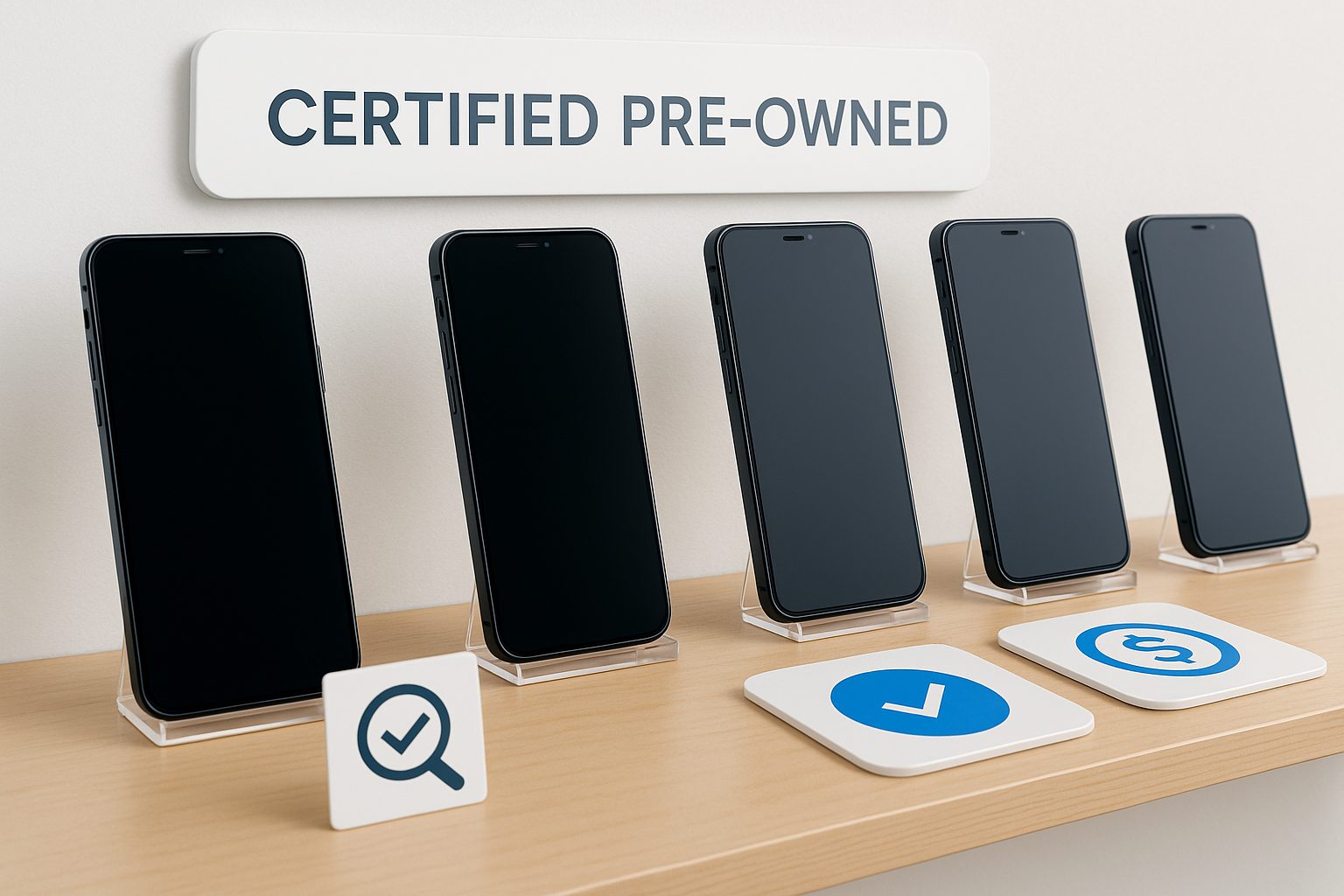
Don't Overlook Certified Pre-Owned
Here's where a lot of people miss a third option: a quality certified pre-owned phone.
A certified pre-owned iPhone 14 or Samsung Galaxy S23 typically runs $300–$450 — often less than a single repair on a newer flagship, and you're getting a fully tested, like-new device with a warranty. For families in Irvine or Rancho Cucamonga who need to set up a second line for a teenager or an elderly parent, a CPO phone plus a prepaid plan can be the most economical move by a wide margin.
iFixForU carries certified pre-owned phones at all locations and can pair you with the right prepaid or postpaid plan the same day — with fully bilingual service in English and Chinese (中英文服务). That matters a lot when you're helping a parent or grandparent who's more comfortable in Mandarin or Cantonese make a decision like this.
What About Carrier Deals and Trade-Ins?
If you're due for an upgrade anyway, check what your carrier is offering on trade-ins before you pay for a repair. Sometimes an AT&T promotion will give you significant credit for a cracked phone toward a new device — meaning that shattered screen actually has trade-in value right now that it won't have in six months.
On the flip side, if your phone just needs a $75 battery swap, doing that repair first and then trading in a fully functional device can get you meaningfully more trade-in credit than handing over a phone that dies at noon.
- Get a repair quote first — it takes 10 minutes and is usually free
- Check trade-in value before and after a repair
- Ask about carrier promotions — they change, and a good dealer will know the current offers
A Quick Self-Check Before You Decide
Ask yourself these four questions:
- How old is the phone, and does it still get security updates?
- Is this one problem, or several?
- Does the repair cost more than half the phone's current resale value?
- Is there a certified pre-owned option that costs the same or less?
If the answers point toward replacement, consider CPO before defaulting to full retail. If they point toward repair, fix the one thing and get another year or two out of a phone you already know.
Quick Takeaways
- The 50% rule: repair cost above 50% of current resale value = consider replacing
- A battery replacement ($60–$100) is almost always worth it on a phone under 4 years old
- Multiple simultaneous problems change the math quickly
- Water damage repairs carry hidden long-term risk
- Certified pre-owned phones are a genuine middle-ground option, not a compromise
- Check carrier trade-in value before and after a repair — it affects your real cost
If you're not sure which way to go, bring the phone in and let someone look at it. A free diagnostic takes the guesswork out of it. Browse iFixForU's certified pre-owned phone inventory to see what's available, or call (626) 800-2030 to ask a quick question before you commit to anything.