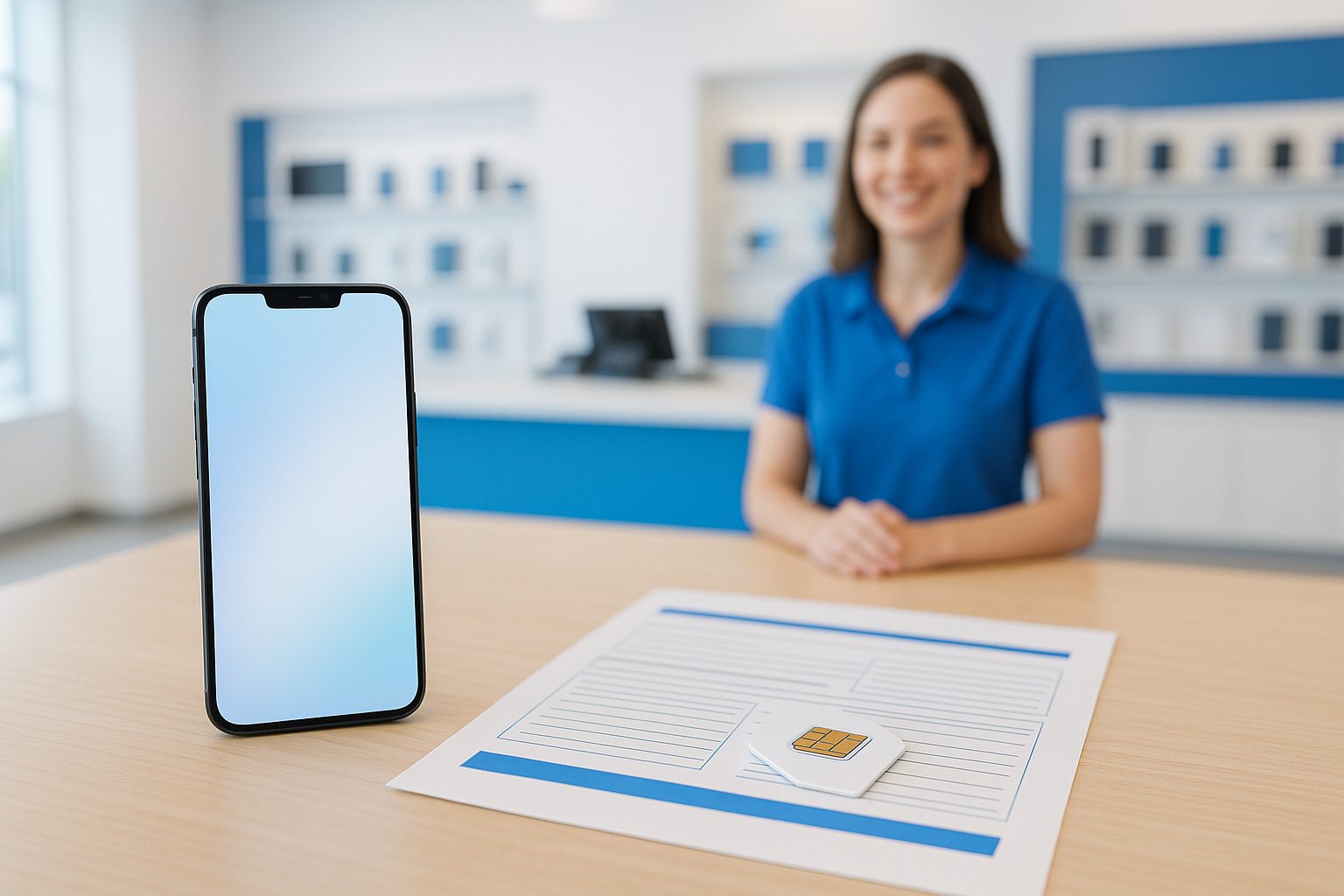
A customer walked into our Rowland Heights store last month holding a brand-new iPhone 16 still in the box, a debit card, and a passport — and genuinely unsure whether any of that was enough to get service turned on that same afternoon. (It was, once we sorted out one small wrinkle.) If you're setting up your first US phone plan, or helping a family member do it, the process is faster than you think — but there are a few real gotchas worth knowing before you walk in anywhere.
Postpaid vs. Prepaid: Pick the Right Starting Point
This is the first fork in the road, and it matters more than which carrier you choose.
Postpaid means the carrier bills you at the end of the month. You get a real account tied to your credit history, which can be great for financing a new device. The catch: carriers will run a credit check, and if you're new to the US, your credit file may be thin or nonexistent. A Social Security Number (SSN) or Individual Taxpayer Identification Number (ITIN) is typically required.
Prepaid means you pay upfront — no credit check, no SSN required in most cases, service starts almost immediately. Brands like AT&T Prepaid, Cricket Wireless, Metro by T-Mobile, and Mint Mobile all run on prepaid models. Plans start around $25–$30/month for basic data and can go up to $60+ for unlimited with hotspot. For recent arrivals or anyone without a US credit history, prepaid is almost always the smoother path.
一个小提示给刚来美国的朋友:无需社会安全号码,预付费套餐当天就能开通。iFixForU 的员工可以全程用中文帮您办理。
What Documents You Actually Need
Getting this wrong is the #1 reason people leave a store without service. Here's the real list:
For prepaid activation:
- A government-issued photo ID (passport works perfectly — domestic or foreign)
- Cash, debit card, or credit card to pay for the plan
- Your phone (unlocked, or purchased from the carrier)
For postpaid activation:
- SSN or ITIN
- Government-issued photo ID
- A US billing address (a friend or family member's address is fine to start)
- Good-to-fair credit score — carriers vary, but AT&T postpaid typically wants a score above 600
One thing people miss: if you're porting a number from another carrier (bringing your old number over), you'll also need your current account number and PIN from that carrier. Don't cancel the old service before the port completes — that's a common mistake that can cost you your number.
Choosing the Right Carrier for Your Situation
Network coverage matters, and it's not the same everywhere. In dense areas like San Gabriel, Alhambra, and Irvine, all the major networks perform well. But in parts of Rancho Cucamonga or the outskirts of the Las Vegas metro, coverage gaps are real.
A few practical pointers:
- AT&T has strong coverage across Southern California and is a solid pick if you use the 405, 10, or 60 freeways regularly
- T-Mobile tends to win on raw data speeds in urban cores
- Verizon is worth considering if you travel frequently outside major cities
- MVNOs (smaller brands that ride the major networks) like Cricket, Mint, or Straight Talk can save you $15–$30/month with nearly identical coverage in most of the SGV
If you call or text overseas frequently — say, to mainland China, Taiwan, Hong Kong, or Mexico — check international calling rates before committing. Some prepaid plans include free calls to China; others charge per minute.
The Actual Activation Steps, In Order
Here's what a typical activation looks like from start to finish:
- Choose your plan and carrier — know your budget and data needs before you walk in
- Buy or bring your phone — confirm it's compatible (GSM vs CDMA, and correct band support for 5G if needed)
- Present your ID and payment — staff will enter your info and verify it
- Get your SIM card installed or eSIM pushed — physical SIMs take under two minutes; eSIM activation is often faster
- Wait for signal — usually 5–15 minutes for the network to recognize the new line; restarting the phone speeds this up
- Test calls, texts, and data — don't leave until you've confirmed all three work
- Set up voicemail — this step gets skipped constantly and then causes confusion later
The whole in-store process typically takes 20–45 minutes, longer if there's a number port involved (ports can take a few hours to a full business day in some cases).
A Real Example: The Arcadia Family Plan Scenario
A family of three in Arcadia — parents on a joint postpaid AT&T plan, college-age daughter who just arrived from overseas — needed to add her as a third line. She had a Chinese passport, no SSN yet, and a phone bought in China. The solution: add her as a prepaid line under Cricket (which runs on AT&T's network), confirm her phone's bands supported US LTE, and swap in a domestic SIM. Total cost was under $30 for the first month. Same network coverage as the parents, no credit check needed, activated in about 25 minutes.
Quick Takeaways
- Prepaid is faster and easier if you don't have a US credit history yet
- A foreign passport is valid ID for prepaid activation at most carriers
- Don't cancel your old service before porting your number — wait until the port completes
- Bring your current account number and PIN if you want to keep your existing number
- Test calls, texts, and data before leaving the store
- SIM swaps and activations are usually free at authorized dealer locations — you shouldn't pay a setup fee
- International calling needs vary — ask specifically about rates to your home country
If you're in the San Gabriel Valley, Orange County, or Las Vegas and want hands-on help getting a new line set up — in English or Chinese — stop by any iFixForU wireless location or give us a call at (626) 800-2030. We'll sort out the right plan for your situation without the runaround.